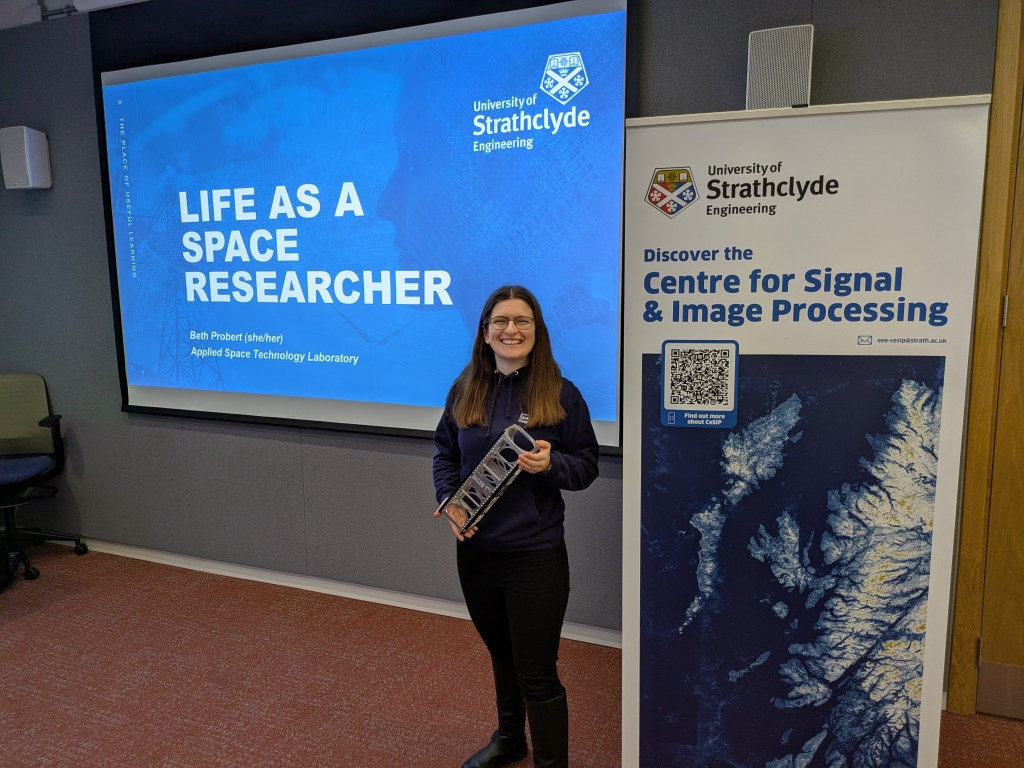
It’s official: I’m a second year PhD student..! What a surreal thought that is. I made it through my first year. I am now no longer a rookie student. I’m letting that sink in a bit as a write this blog. Finishing the first year of my PhD fills me with immense pride and motivation for the next 2.5 years, but it also makes me feel a bit scared! How has this year gone by so quickly?! I’ve got so much still to do! The difference between this fear and the fear I felt when I started my studies last year, is that its more easily fought off because I now have self-confidence. I know I am cut out for this. I know I can do this, because I’ve already successfully done the first 12 months of it.
How do annual reviews work in a PhD?
For readers who may be unfamiliar with the inner workings of a PhD (as I was this time last year), at the end of the first year of your studies you will have an annual review. Each university may do this slightly differently, but in my case this involved the following:
- Writing a 6 page report about my first year of work, including my literature review, any results I had, and all presentations I’d given or papers I’d written.
- Preparing a future work plan, detailing exactly what I planned to work on for the next 12 months, and what my expected research outputs would be.
- Giving a 20 minute presentation to two academics outside of my research group about my PhD, followed by up to 25 minutes of questions from them.
PhD students have a review like this once per year, but the first year review is often the most intense. This isn’t just because its the first time many people have been assessed this way, but it also involves the most preparation. For my 2nd year review, for example, I won’t need to write a 6 page report – I can submit a paper I have written in that year instead. In addition, if significant concerns are raised by your assessors in your first year review, this can have an impact on the continuation of your studies. Needless to say, I was feeling a lot of pressure going into my review!
Tips for preparing for a first year PhD review
I’m pleased to say my first year review went really well! My assessors were happy with my progress and understood the work I’d done and was planning to do in the future. I think having some experience of giving presentations from my previous roles in the private sector helped me here! For anyone reading this who has got a first year PhD review coming up, here are my top tips for preparing and presenting:
- Try explaining your research to people you know outside of academia. Just because you are presenting to academics doesn’t mean they are going to automatically understand the technical basis of your research. Present your work to family and friends, and check they can understand your research topic before delivering your presentation.
- Keep text on your slides to a minimum. Knowing exactly what to present can be difficult, and it can be easy to fall into the trap of giving too much detail. Try to avoid slides that are walls of text or equations, instead using figures where possible.
- Check the tech requirements of the room you’re presenting in! Walking into a room to present and realising your computer doesn’t have the right port for the monitor you’re presenting on can really throw you off! Visit the room beforehand to check everything will work smoothly.
- Ask your assessors if they want to ask questions during your presentation, or afterwards. Different assessors have different styles. Rather than being thrown off mid presentation by unexpected questions, double check beforehand how they would like to ask questions.
- Remember, this is a conversation. As a PhD student, you are the authority on your research. See your review as an opportunity to talk about your research uninterrupted for 20 minutes, sharing your passion and expertise.
- Feedback is your friend! You will get feedback in your review. Its part of the process, and its all designed to make you a better researcher. Try not to take any of it personally and use it to improve your work.
Overall reflections from my first year of study
For anyone who has read my reflections from months one and six, we are now onto the format you may have been expecting! So, how has my first year gone?
I am still as enthusiastic as ever about my research and being a PhD student. My passion for space and engineering is not going anywhere! I’ve had some awesome opportunities to share my work with others, presenting at conferences in Glasgow and abroad, and taking part in outreach activities to help inspire future generations about STEM careers. Seeing other people get excited about space brings me so much joy!
One thing I have struggled with in my first year is that my enthusiasm has led to me taking on quite a lot of stuff, which I’ve found really difficult to manage at points. As well as my research, I’ve taken on teaching assistant work for electronics labs and Python labs, continued volunteering on a few committees, doing outreach as a STEM ambassador, and completing my PGCert qualification that I need to be able to graduate. There have been a few weeks where the familiar feeling of burn out crept in, and my work life balance was non-existent. I know academia has a reputation where working 12 hours a day is ‘normal’, but this is certainly not the case in my research group. So thankfully these hectic weeks have been uncommon. Getting a better balance is something I want to work on throughout the rest of my studies, to help me keep performing at my best.
On a technical level, I think I have a really strong foundation to take into the second year of my research. My first year mostly consisted of literature review – reading and analysing as much information as I could to get a better understanding of my research landscape, and where my work fits into it. I’m now moving from the reading phase to the doing phase, where this time next year I hope to have some code and some results (eek!). This transition is trickier than I thought, as the temptation is always to think ‘but there’s more I can read before I try anything!’, but especially as an engineer, the best way to learn is by getting stuck in. I’m excited for what I’m going to develop in the coming year!
Socially speaking, I am absolutely loving Glasgow – what a great city this is! I’m getting on well with everyone in my research group, and we had a really fun Christmas Party and a board game night in our lab a few weeks ago. I’ve met some new people through my running club, and getting involved with sports more at the university. I’m at a point where I feel much more relaxed and confident when presenting a paper or my work to the rest of my group, rather than being a bucket of nerves in the hour before I had to present! I’m still working on getting a Nintendo Wii for the lab, but that has been put on hold for the potential of us getting a new coffee machine..! (Oh, yes – I drink coffee now. Academia changes you!)
My achievements and challenges
So what have I achieved since my last update? I have:
- Passed my first year review! (Surprise surprise!)
- Finished my first journal paper, and I’m now preparing it for submission to a journal (*screams*)
- I won a highly commended poster prize at the 2024 CENSIS Technology Summit.
- I won the second runner up prize for the DoraHacks IAC Hackathon, receiving a 100EUR prize!
- I was selected for a scholarship to attend the European Space Agency’s 2025 Space Systems Engineering Summer School in Belgium in May this year. I can’t wait for this!
- I ran a series of workshops for the Institute of Physics to inspire S1 and S2 girls in Scotland about careers in science and engineering. They asked some incredible questions about the future of space, and how satellites help us here on Earth.
- I traveled to conferences in Ireland and Belgium, meeting with professors at UCD to learn more about their space and blockchain work, learning about open source software at FOSDEM.
- Not an achievement as such, but I really enjoyed being a teaching assistant this semester. I got to refresh some of my coding and electronics skills, and it was really rewarding to help students learn new things and watch them grow.
As for the challenges…
- Writing a journal paper is hard. Like really hard. Not just the writing, but the reviews too. This was a big learning curve for me, and I have learned a lot in the last few months about writing styles, making good figures, and other skills that had definitely gotten rusty in my time away from academia. Writing a paper is a long process that takes some patience, and you need to be prepared for it to take a while. You will get a lot of feedback on your work, and its a skill in itself to be able to use it constructively rather than letting it get you down.
- Burn out is real. There were a couple of times where everything felt overwhelming, and I genuinely wondered if I was cut out for this and whether I could succeed in academia. I learned the importance of reaching out to family and friends, making sure I got out to move my body, and taking breaks. Ironically, I should have listened to the tips I wrote at the end of my 6 month review blog…!
- Not every connection you make is going to work out. There have been times I’ve emailed people to try and learn from them, and I’ve either been ignored, or it turns out that they may not be the best fit for my research needs. This has been frustrating, and can feel like a waste of time. But you never know until you try!
Lessons learned
And finally, here are a couple of important lessons I’ve learned from the first year of my PhD:
- Leave your pride at the door. You’re a student, not a prodigy. You will make mistakes, and that’s okay! PhD students are there to learn. You may be coming from a world where you got really strong exam results, but a PhD is unlike any other educational qualification you can undertake. So, give yourself some compassion and allow yourself to learn. Take every opportunity that you can to get feedback and grow.
- Keep your information organised! I fell into a bad habit of constantly having 50+ tabs open on my laptop, along with 10+ research papers open in Zotero. Not only did this stress me out massively every time I opened my laptop, it also meant I couldn’t easily find the information I wanted. Sort your tabs into bookmarked folders in your browser, move emails out of your inbox into folders, and store your research papers in collections using tools like Zotero.


 She Codes the Cosmos
Leave a reply to gavigne@gmail.com Cancel reply