Sometimes in life you have to take a chance on yourself, and earlier this month I did just that. I left my job and my five year career as a software engineer to chase my dream: starting a PhD in the space sector.
If childhood Beth could see me now, she would say, ‘Well of course this is what we are doing! This is what we always wanted to do!”. But she’d likely be surprised about the route I took to get here, because it ended up being very different to what I had planned.
Starting University
I enrolled at the University of Bath in 2015 to study Physics with Astrophysics. I’d gotten onto the Masters course, and had set my sights on becoming Dr Beth as soon as I’d finished my undergraduate studies. From a young age, I had known I wanted to study space. I had always been fascinated by the vastness of the universe and the possibilities it held for humanity. The fact of the matter is though, that when I started my undergraduate degree I had no idea what a career in space actually looked like, nor what getting an Astrophysics degree involved.
I was the first person in my family to go to university. Whilst I was fortunate to receive a scholarship that supported students from low income backgrounds, which gave me financial security, I had gone to university with next to no information on what it would be like from a social or educational perspective. As a result, I found the transition to university life much harder than I expected. I was often calling home asking my mum to come and bring me home, and truly believed I wasn’t cut out for my childhood dream.
Thankfully I didn’t drop out of university, but I did drop out of my Masters degree onto a one-year-shorter Bachelors degree. I had decided I wasn’t cut out for academia – I wasn’t smart enough or in the right circles to make that dream work. So I put my dream on the back burner, and found a new passion in software.
Moving Into Tech
After graduating in 2019, I started a software engineering apprenticeship where I developed more formal skills in programming and computer science whilst also starting to establish my career in tech. My career as a software engineer would last until 2024, and over those 5 years I learned and experienced so much. As well as developing technical skills in things like Python, software testing, and DevOps, I also learned a lot about myself: the fact I enjoyed researching new things, I loved writing articles for my blog and magazines, and I loved collaborating with other people. As it turns out, these are all skills and interests that come in very handy for a PhD!
As much as I loved my career in tech, over time I felt like I was losing my spark and that something was missing. I worked out what was missing when I worked on a Satellite Communications project as part of a secondment: I was missing space! This should have been obvious to me, and to my friends and family around me it was abundantly clear, but I suppose I had put my dreams on hold for so long I had fallen out of touch with them.
Facing My Fears
Working in Satellite Communications reignited my passion for space related work, and I started to wonder if it was still possible for me to have the career I’d started dreaming of all those years ago. This was in 2022/3, and for a while it just stayed as a thought in my head.
This changed in late 2023, when I had a conversation with a good friend that gave me the push I needed to put my thoughts into action. We spoke about our ambitions in life, and I shared that mine was to do a PhD in the space sector. They asked why I wouldn’t do one, and I listed off a bunch of reasons about the timing not being right, worries about the pay cut, insecurities about not having a Masters degree and not having been in education for 5 years, and generally not just feeling good enough. They responded by telling me that if its my dream, I have to try, regardless of my fears and doubts. They said they believed in me to make it happen.
And then the work began.
I reached out to everyone I could think of who could help me: lecturers from my undergraduate course, the alumni careers team at my university, mentors, friends in academia, old managers. I wanted to find out if my dream was in fact possible. I built up an incredible support network which provided me with all the information and encouragement I needed to go and find the right PhD for me.
I was still worried about everything. I still had self-doubt. But I had an army of people behind me, so I felt the fear and did it anyway.
As it turned out, I needn’t have worried about not having a Masters degree. When I found the advert for the PhD program I am now on, I emailed my now supervisor to show my interest and see if a Bachelors degree with 5 years industry experience was sufficient for my studies. The answer was a resounding yes.
As for it being the wrong time, in life there is very rarely a right time for anything. Sometimes you just have to take the leap.
Making My Dream a Reality
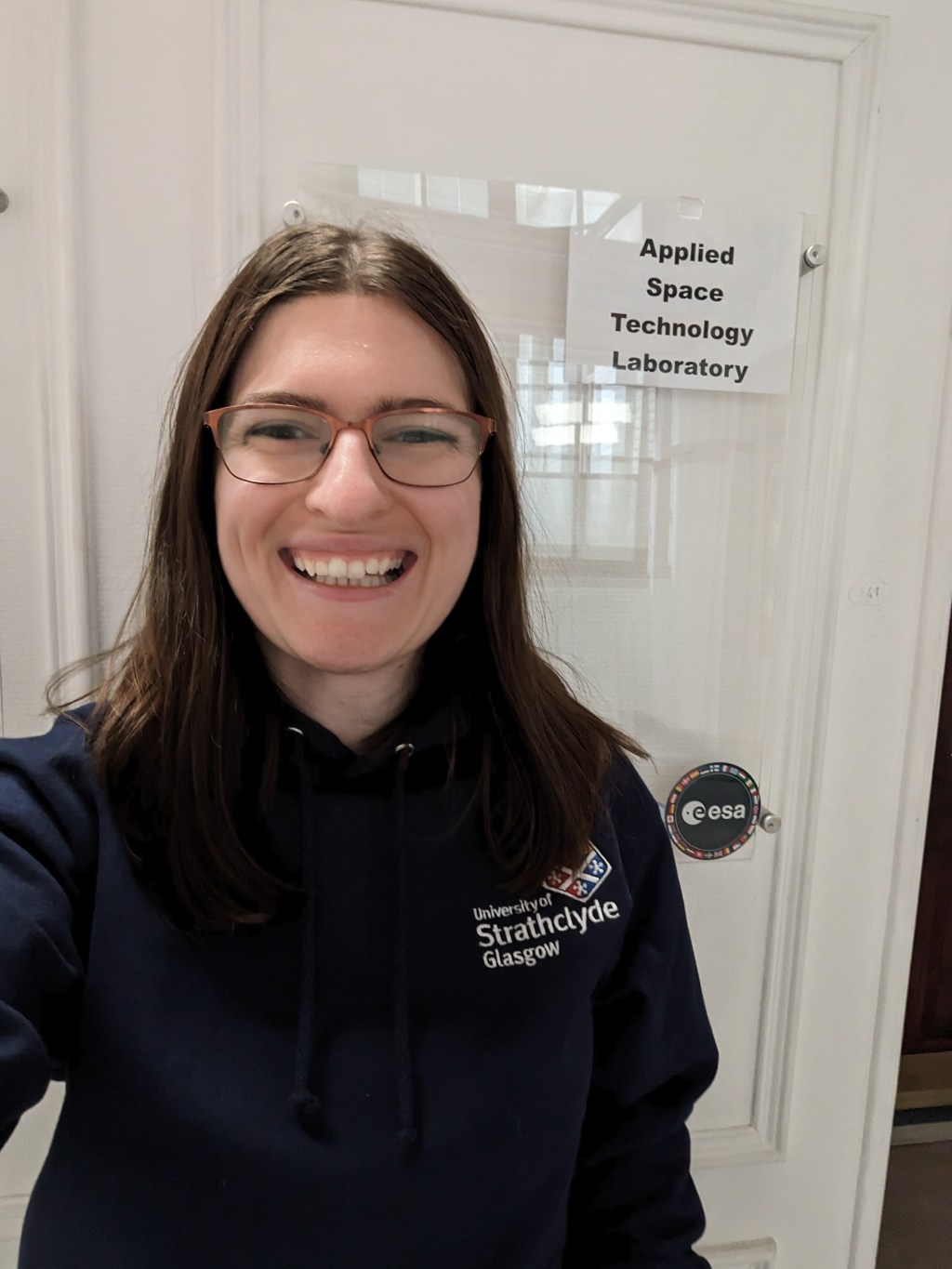
A few months after that initial email, I am now 2 weeks into my PhD with the University of Strathclyde researching the development and application of distributed ledger technologies to make space more sustainable. I get to tell people I am a researcher at Strathclyde’s Applied Space Technology Laboratory, and honestly I think that is the coolest thing in the world.
Those feelings of self-doubt still sit in the back of my mind, but they are now much smaller than they were before. They did not stop me getting to where I am today. I am here. I am living my dream. I have my spark back.


 She Codes the Cosmos
Leave a reply to The Mindful Migraine Blog Cancel reply