I imagine that taking off in an aeroplane is nowhere near as exhilarating as blasting off into space on top of a rocket. But if any flight were to come close, it would be the one taking me to the European Space Agency to fulfill a lifelong dream.
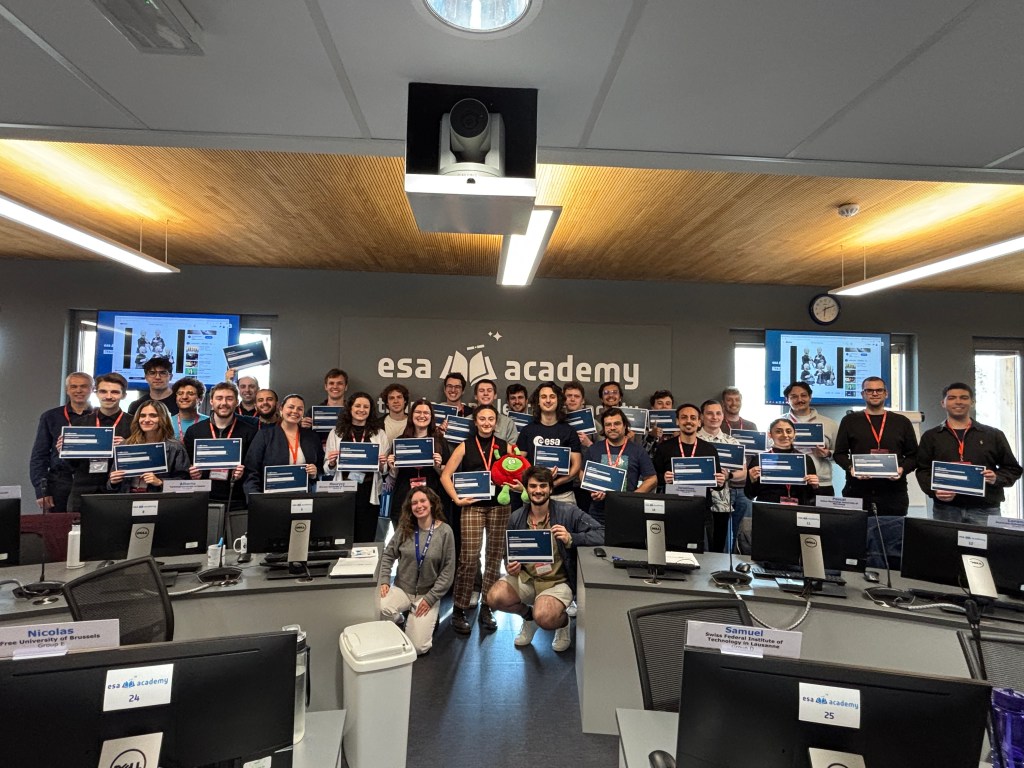
This was me on the 5th May 2025, when I travelled to Belgium to spend the week at ESA’s Galaxia Centre completing their Space Systems Engineering Training Course. Out of hundreds of applicants, I was one of 30 students from ESA member states selected to attend this course, with full ESA sponsorship for my travel and accommodation. To say I was excited was an understatement! I landed in sunny Brussels, and headed south to the small town of Saint-Hubert to meet up with my fellow students and get ready for the week ahead.
Mission Control: Training like a Space Systems Engineer

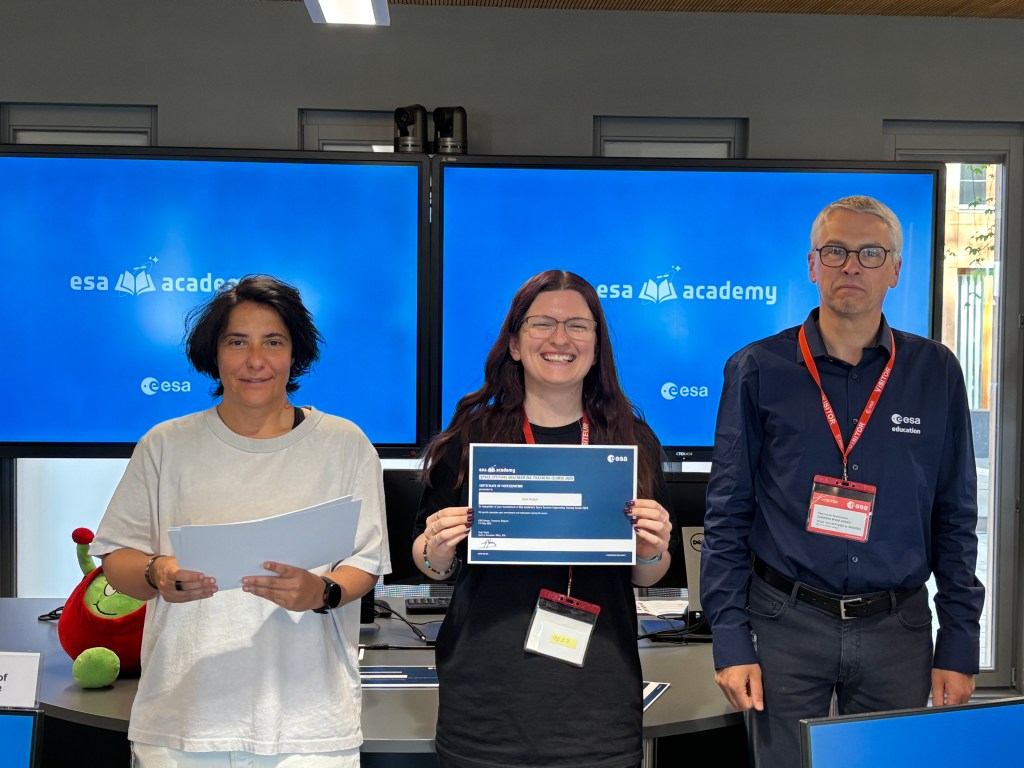
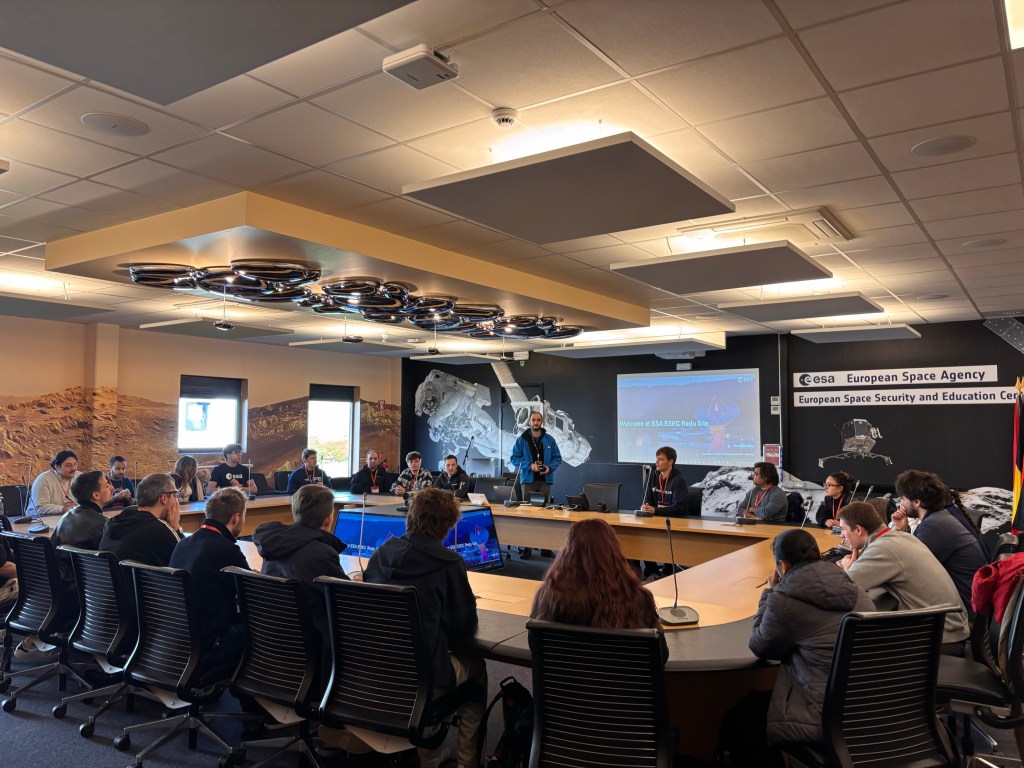
There aren’t many things that would get me out of bed before 9am, but this four-day course started with a shuttle bus arriving at 8am to take us to ESA’s Galaxia Education Training Centre. The training room was set up like mission control, with
each student having their own named desk facing the lecturer, and a desktop microphone that we used to ask and answer questions. It all felt incredibly cool. At the start of day one, we were each asked to introduce ourselves and our research. During my introduction, I was asked why I had applied for this course, and my answer was almost a reflex:
“Because it’s ESA! Why would I not take the opportunity to learn here?!”
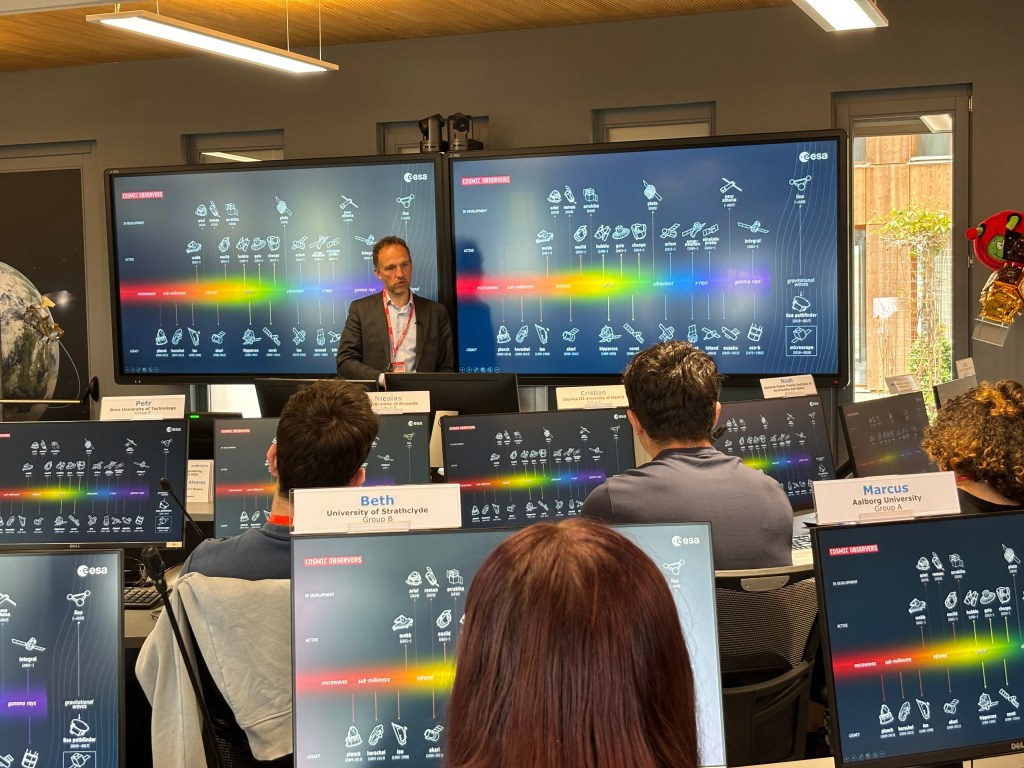


We covered a wide variety of topics during each 10-hour day of learning. Our days ran from 08:30 – 18:30, including 8 hours of lectures and exercises. We started with a series of lectures from Joachim Fuchs, Head of ESA’s Future Engineering Division, and Jose Lorenzo Alvarez, PLATO Mission and Payload Manager at ESA, introducing the fundamental concepts behind space systems engineering, the role of a systems engineer, and the tools used by ESA. I haven’t been to a lecture since I finished my undergraduate degree in 2019, making my note-taking feel quite nostalgic. I filled pages with ideas and inspiration for my PhD, life lessons from the experts, and reminders to look things up later. There was an abundance of information to take in, and I was trying to be as sponge-like as possible. Thankfully, perhaps knowing how many notes we’d take, ESA has given each of us a chunky notepad and a pen!
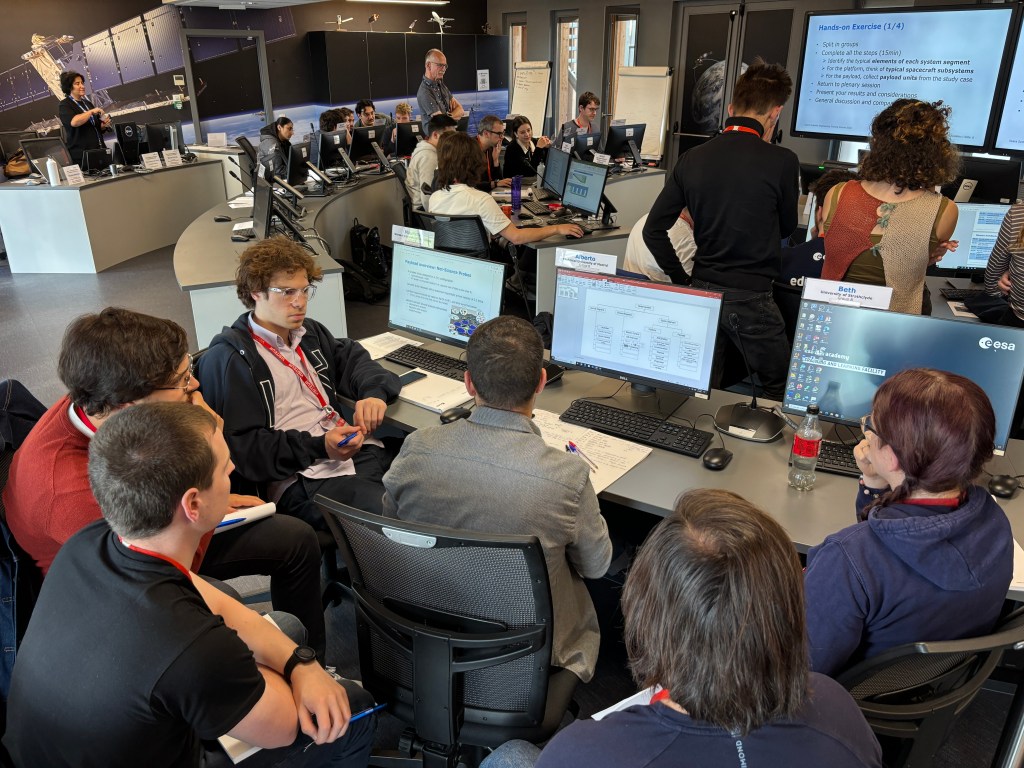
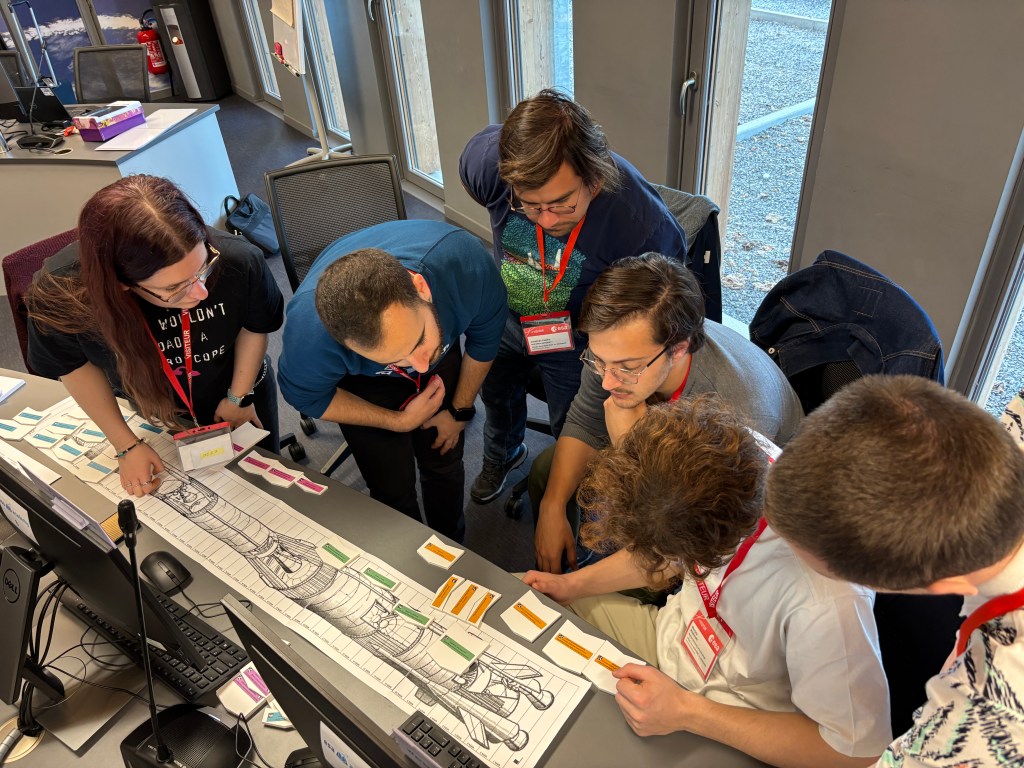
In the second half of the week, we were taught by ESA Systems Engineer Ilja Skrypnyk, and MTG (Meteosat Third Generation) System and Payload Manager, Pieter Van Den Braembussche. They introduced hands-on exercises into our schedule, which gave us the chance to work together to solve complex engineering problems. Throughout the week, we were tasked with planning and executing a mission to send weather monitoring probes to Mars (not a small task!). We learned how to plan for a mass budget, account for risks in the launch schedule, configure the layout of the instruments on our satellite, and design the foundations of the mission architecture. Not only was this a fantastic way for us to learn, as engineers who prefer to learn by doing, but it was also a lot of fun – getting creative with our satellite designs, and imagining out-of-this-world catastrophes that we would need to account for.
The experts also shared insights into the complex engineering that has gone into recent ESA missions such as the Proba 3 formation flying mission, the Bepicolombo mission to Mercury, the newly launched Biomass mission, and the Juice mission exploring the icy moons of Jupiter. I am in awe. Hearing about their development was incredibly interesting, and my main takeaway from these insights, other than how awesome these missions are, is that things can go wrong in so many ways. Designing a space mission is literally rocket science, and it has reputation for being difficult for a reason! And because of this, the role of a systems engineer is key: they need to help foresee and prevent disasters, and help ensure success in the extemes of the space environment, where failure is not an option.
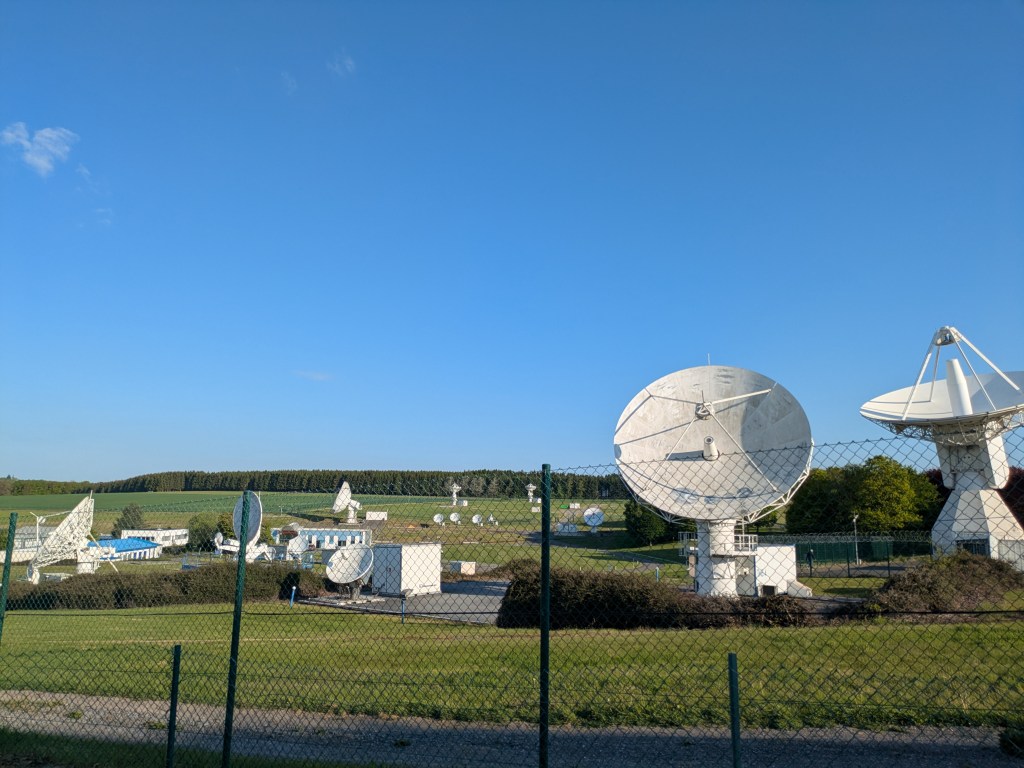
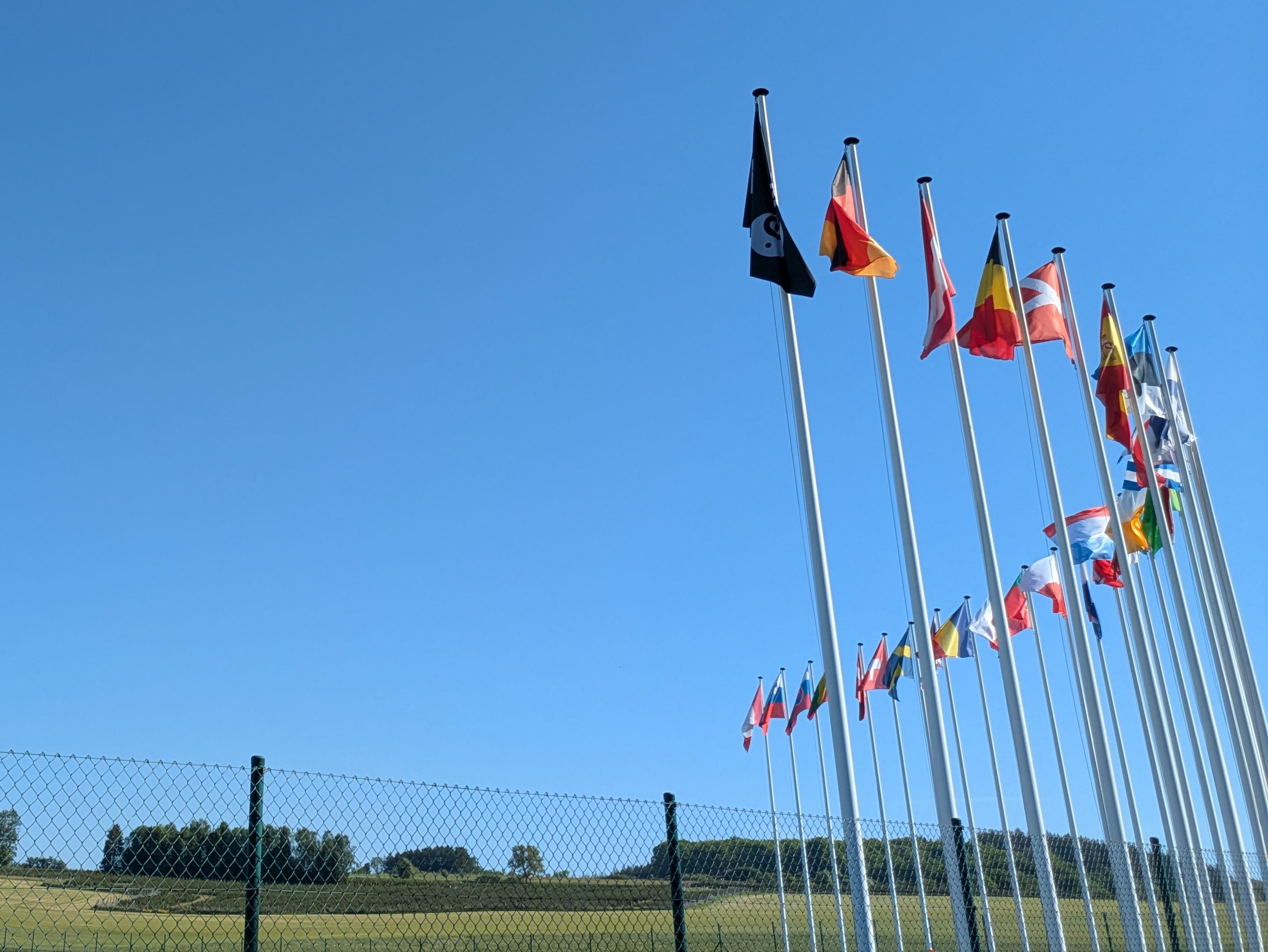
At the end of the week, we were able to visit ESA’s Redu Ground Station and see some of what we had learned being put into action. The Redu site is currently responsible for the in-orbit validation, testing and telemetry for ESA’s Galileo and Proba missions. During the week, ESA announced that their Proba 3 has become the “the world’s first-ever precision formation flying mission”. Proba 3 is managed by a team based at Redu, and getting to see the control room up close was beyond inspiring. It brought home the importance and impact of everything we had been taught earlier in the week: this is real!
We returned to Galaxia later that day, and finished the course with an exam. Time to show that we had been paying attention during the week! ESA training courses provide university students with ETCS credits for their studies, as well as being fun and interesting! Everyone in my cohort passed the exam with an average grade of an A (great job team!), and with that our time at ESA came to an end.
Across the Universe: Making Friends at ESA
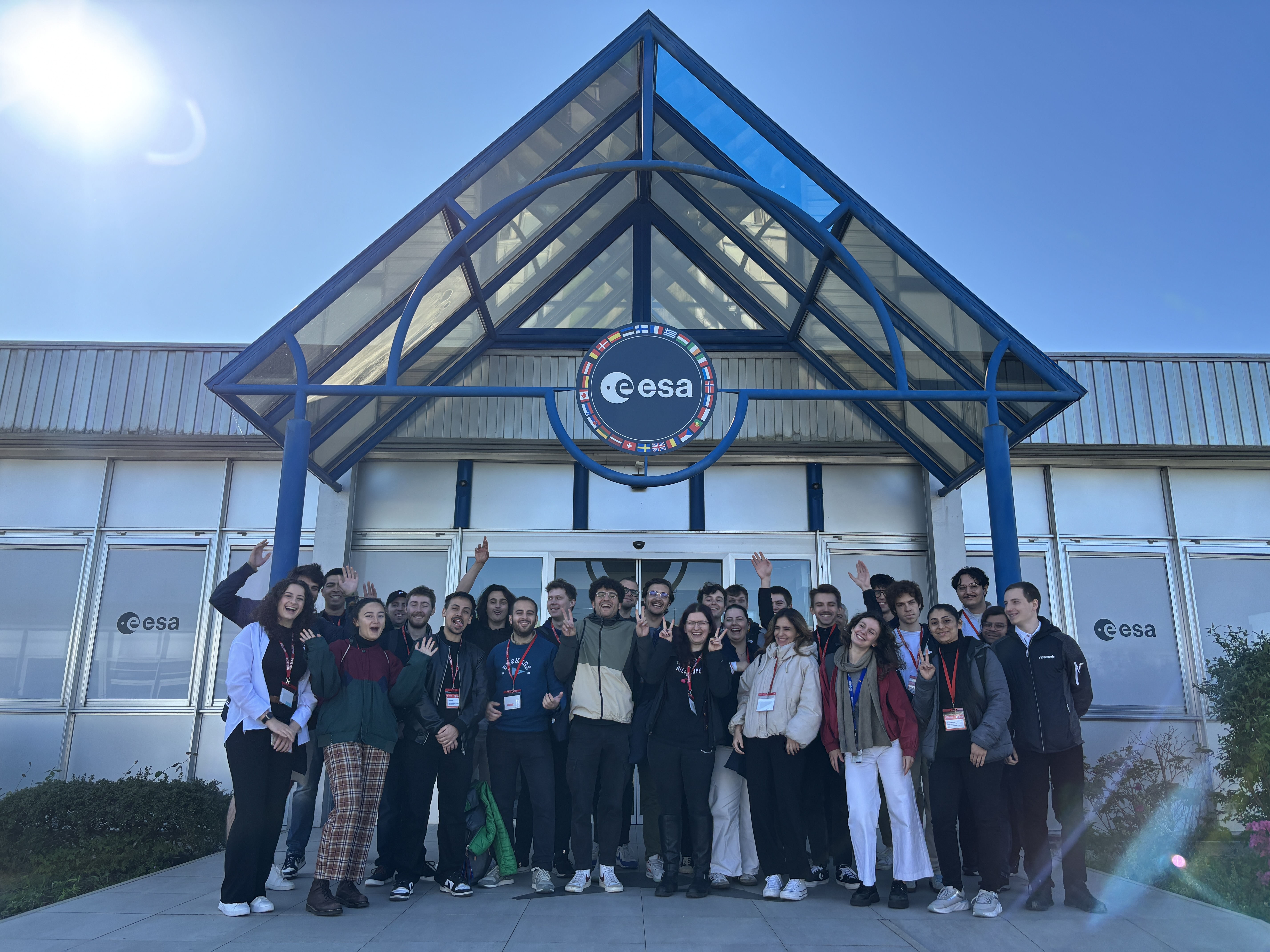
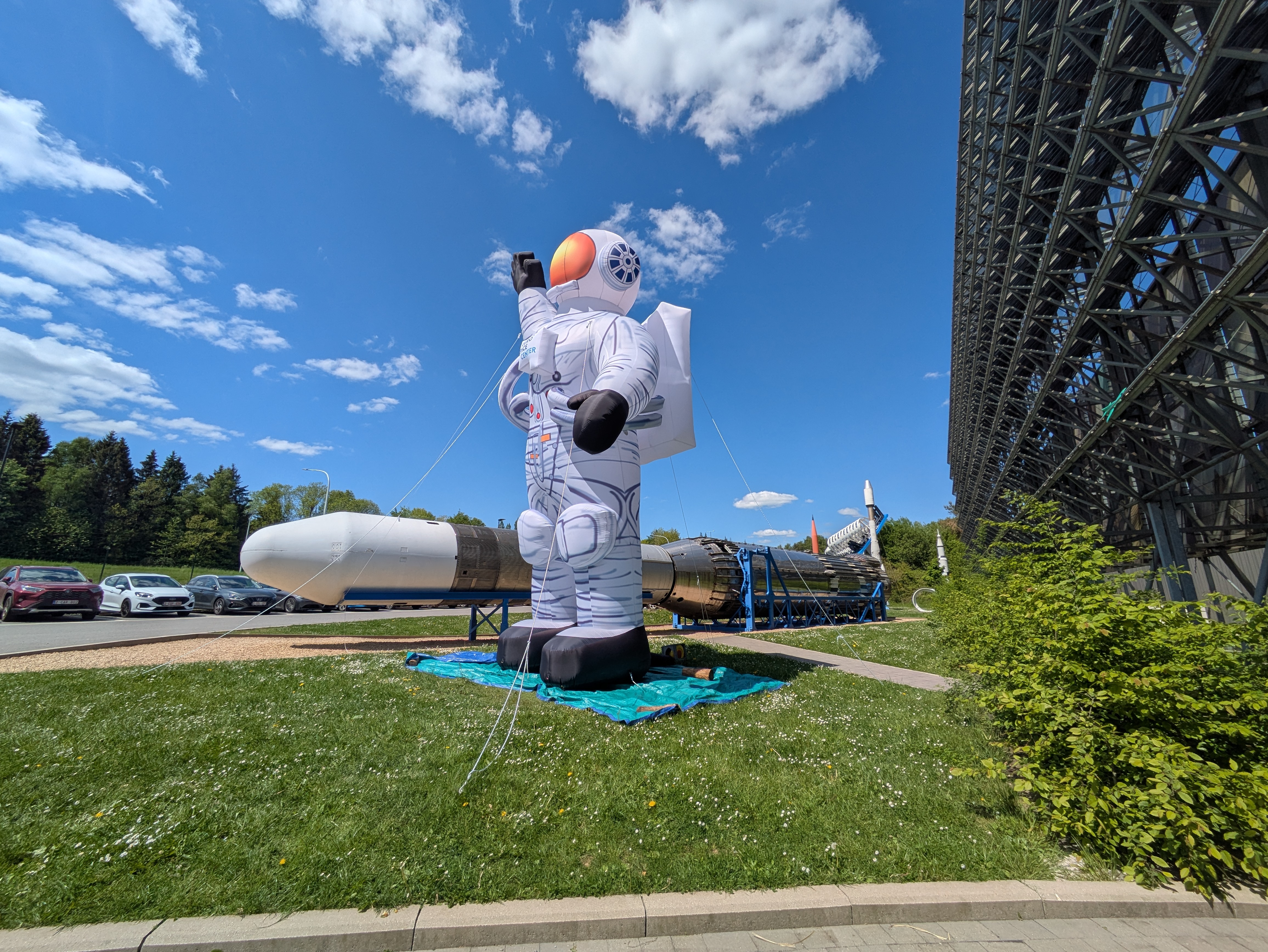
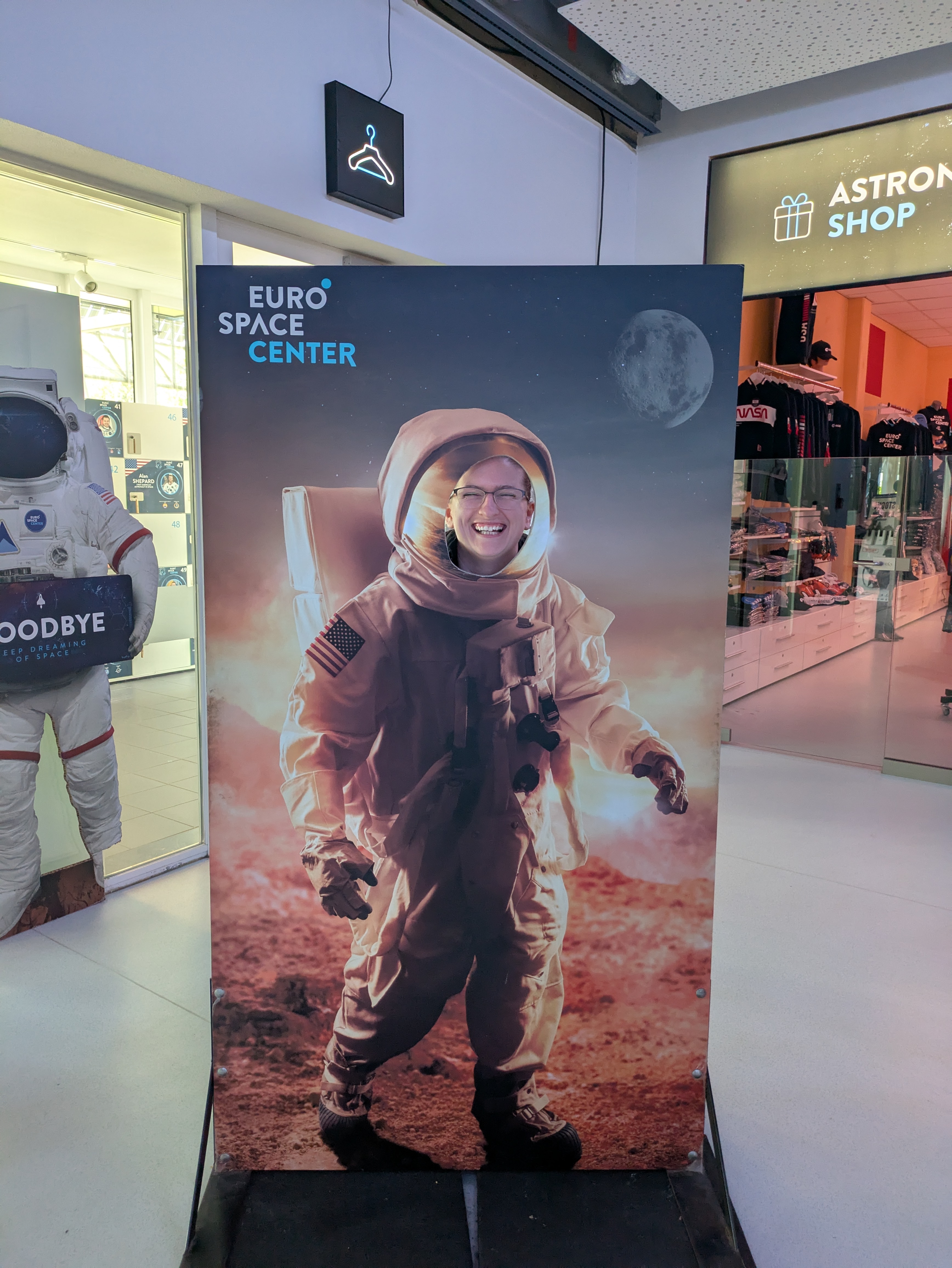
As well as learning about systems engineering, this course gave me the opportunity to meet some brilliant students from across the world who shared my love of all things space. Our cohort was made up of Bachelor’s, Master’s and PhD students from the UK, Canada, France, Germany, Poland, Belgium, Sweden, Switzerland, Italy, Spain, Portugal, Denmark and Czechia. Some of us (not me, sadly) are talented musicians and artists, whilst others love sports, reading, and travelling. I loved getting to know everyone over the course of the week, attempting to learn fun words from their languages, understanding the nuances of their education systems, sharing book recommendations, and sharing our thoughts on the recent conclave.
ESA organised our evening meals, which meant that after a packed day of learning, we could fully relax. We found fun ways to entertain ourselves in the small town of Saint-Hubert, including streaming the Champions League games, going for a run along the nearby river, having a beer outside in the sun, or playing games together. Despite the intensity, the week felt surprisingly restful. Outside of this ESA bubble, I didn’t have a care in the world.
It wasn’t just the students who were social. During our lunch breaks at Galaxia, we were often joined by our lecturers and spent time chatting to them about their work. Jose, who lectured to us at the start of the week, told us about his previous roles working on missions like the James Webb Space Telescope, which he said is the most exciting thing he’s ever done and one of his proudest moments. We also chatted about the future of the space industry, and shared thoughts on satellites-as-a-service, the New Space Era, and the future role of space agencies. I mean, how often do you get to have those chats on a Tuesday lunchtime?!
As a testament to how well our cohort got along, we all chose to get on the 7am train to Brussels the day after the course ended so that we could go and get one last brunch together before we went our separate ways. We had Belgian waffles in the glorious sunshine, and explored museums in the capital. I was sad to leave Belgium that Saturday, but I left knowing I’d made some new friends that I hope to see again in the near future. I flew home feeling incredibly inspired, connected, and hopeful for the future of the space sector.
Mission Debrief: Lessons Learned

It’s been 4 days since the course ended, and I’ve realised that distilling all of the information I learned last week is no small feat. I imagine I’ll continue to reflect on this course for a good while yet, and I’m glad I made such detailed notes for me to refer back to in the future! That being said, here are a few of the key takeaways I had from this training course:
- Take every opportunity you can. Apply for everything! Some students in my cohort had applied for many other ESA schemes before being accepted to this one. Put yourself out there – it’s worth it!
- State the obvious. When you’re learning or designing something new, there is no such thing as a stupid question. Question what you hear, no matter how obvious it may seem, and make a note of any assumptions you make – you never know when you may need to challenge them.
- Less is more. When embarking on a new project, don’t fall into the trap of going into too much detail too quickly.
- Speak up! People will listen. Share your ideas with others.
- Don’t be afraid to ask for help.
- I learned lots of technical details which I’ll use for my PhD research, but a key theme is that the New Space Era is bringing significant change to the space sector, and the role of space agencies is changing. Governance models need to adapt and space operations need to be more agile.
Your Launchpad: How to Apply
If you are a university student interested in applying for an ESA Academy training course, you can check out all of their current open opportunities online.
To be eligible, you must be:
- at least 18 years old;
- a citizen of an ESA Member State, Canada*, Latvia, Lithuania, and Slovakia;
- enrolled as a 3rd or 4th year Bachelor, Master or PhD student in a university at the time of the Workshop (not graduating before the course);
- studying a STEM subject.
When you complete your application, you will need to submit your degree transcript, a Europass formatted CV, a motivation letter and a recommendation letter from a university professor or supervisor. More specific details are provided on the applications page for the particular training course, and requirements can vary slightly.
 She Codes the Cosmos
Leave a comment