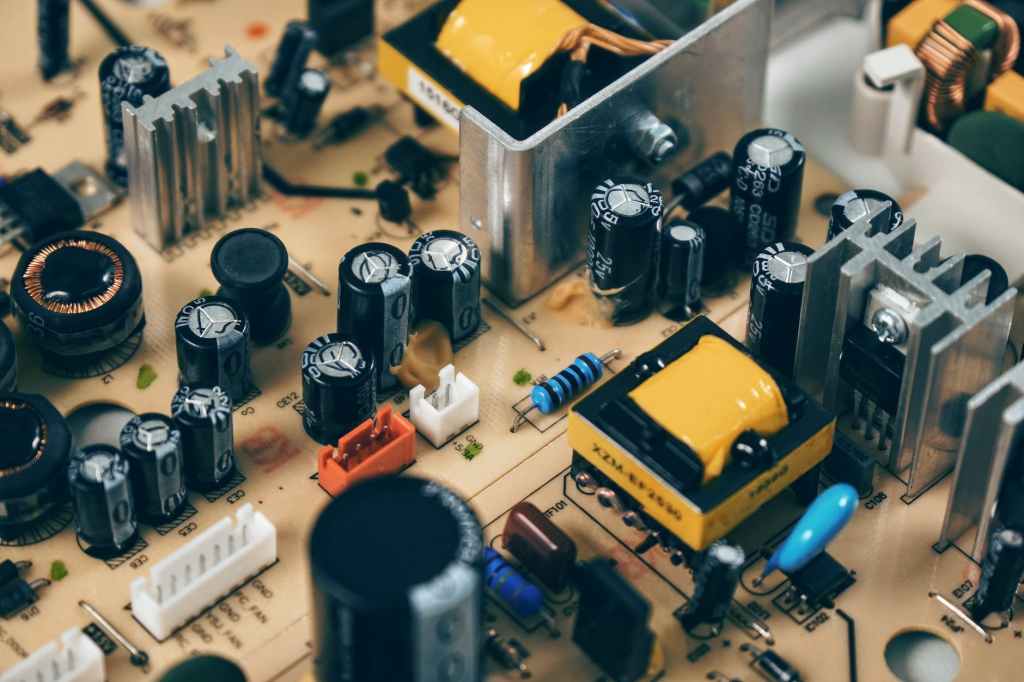
I should start this piece of by saying that ‘newbie’ may not be the exact right term to describe me in relation to electronics, because it’s not something that’s ‘new’ to me, but it’s something I’ve always struggled to be any good at. Over the past year or so, I’ve been on a journey to develop some electronics skills and maybe even make some fun circuits along the way, and I wanted to share my reflections about what I’ve learned.
It all started when I was younger
When I was about 10, my mum got me a ‘circuit’ building kit called Hot Wires, and it was my favourite thing to play with. I could easily spend hours snapping components together to make circuits that acted as a burglar alarm, frisbee launcher or even an FM radio. This kit was so easy to use, with rigid bits of plastic replacing fiddly wires and all components snapping together nicely so that you could carry your circuit proudly to your parents to show it off. It was not the most elegant of things, nor the most sophisticated, but it taught me a lot of the basic principles about electronic circuits and how key components like bulbs, diodes and motors would work. I’m not exactly sure what happened to my Hot Wires kit, or why I stopped playing with it, but the fond memories I have of using it is one of the two main reasons I had for wanting to learn electronics in my mid-twenties.
The other reason is because at university, I was rubbish at electronics and understanding the concept of electricity. I had to take two modules about the theory of electricity whilst studying Physics with Astrophysics at university, and these were the only two units I came close to failing in my degree (I was only a few marks about passing both of them!).
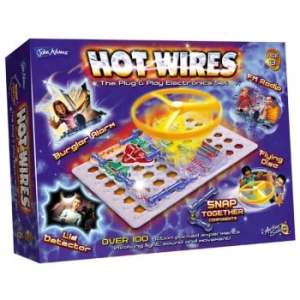
We also had to do practical electronics labs at university which I found incredibly confusing. It was nothing like using my Hot Wires kit – the wires were incredibly fiddly and all the components were so small. Not only that, but the circuits I was now tasked with building were far more complex than a rudimentary lie detector. I felt very overwhelmed and disheartened by not being able to conquer electronics, so once those modules at university ended I didn’t think about electronics again. I just accepted that maybe it wasn’t for me.
… and then things changed!
In 2020, in the midst of pandemic boredom, a group of my friends from work came up with an idea for a project that would help us develop both of software engineering skills (since that’s what we all do!) and learn some electronics on the side. We were going to come up with a way of improving the train detection system at the Coate Water Miniature Railway in Swindon, where my friend’s dad volunteers. After spending a day visiting the railway (and having a ride on the trains) we set to work learning electronics, and for me this opened a huge can of worms. To help me learn about electronics, and a bit about how you program hardware, I bought a Raspberry Pi Pico Discovery Kit and a Raspberry Pi Pico which is a programmable microcontroller, as well as a breadboard, some wires and other basic components.
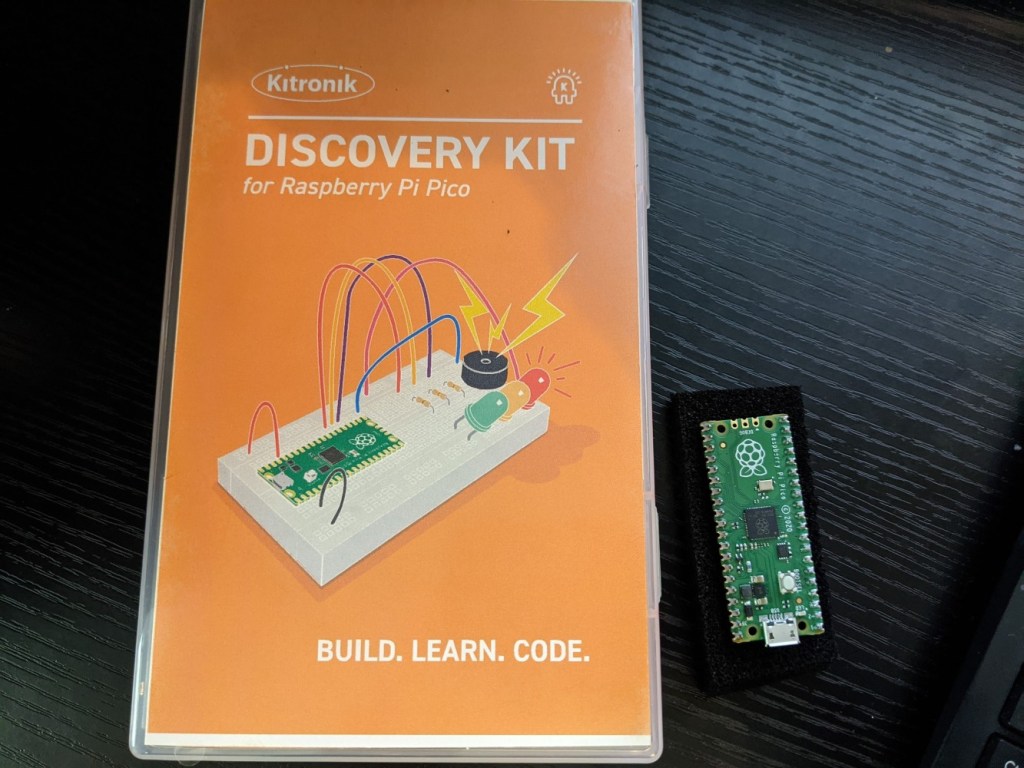
This was the first time I’d ever used software and hardware at the same time so it was quite exciting! I had similar feelings when I started using this kit as I did when I first got my Hot Wires kit nearly 15 years ago. This kit was a great place for me to start re-learning electronics and to get used to the basics again. Each time I completed an experiment from the booklet I felt an immense sense of achievement, but instead of running to show it to my mum I now ran to show it to my partner! Some things never change.
Maintaining a love for electronics
I am aware that my attention span for learning new things and skills is relatively short. I imagine this is why I stopped playing with my Hot Wires kit – I likely got bored or frustrated with it. My number one top tip for learning any new skill, not just electronics, is find ways of maintaining momentum. For me, this came in two forms: People and Products.
In late 2020 I was lucky enough to meet Shrouk El-Attar, an incredible electronics engineer/belly dancer/badass. She is so passionate about her love for electronics that she posts about it on social media, and in late 2021 she started ShroukieTronix – her own, colourful electronics lab where she shares key skills and information. Shrouk has been an incredible influence for me, and her love of electronics is infectious! She also put me in touch with RS Grassroots, an organisation that supports students and young people wanting to get into STEM. I entered a competition sponsored by them, and won a Printed Circuit Board (PCB) necklace! It was similar to the Raspberry Pi Microcontroller I’d used before, in that it was programmable and fun, but this was a new thing to play with which also helped reignite my interest for learning electronics.
In terms of products, in addition to the ones already mentioned, a really fun way I found to keep myself interested in electronics was by having an electronics advent calendar! My partner got me one for advent in 2021, and this was a lot of fun! You get to build a new circuit every day for 24 days with each door revealing a new component: LEDs, resistors, buttons, speakers etc. all the things you need to build something silly but learn at the same time. This advent calendar reinforced some of the theoretical principles that I’d attempted to learn at university, about capacitance, charge, and that humans can conduct electricity!
Key Lessons
So, the main lessons I want to pass on as an electronics newbie who’s still on a journey:
- Don’t give up! Just because you aren’t good a something initially doesn’t mean you can’t learn to be good at it over time (even if it takes a while!)
- Find someone that inspires you to keep going. This could be someone online, a friend, a colleague or anyone who gives you that extra push when you just can’t work out why your circuit isn’t working!
- Invest in products or tools that help you stay interested in learning. Even silly things like an advent calendar or a child’s toy can spark an interest in something and help you stay focussed. Make learning fun!
 She Codes the Cosmos
Leave a comment